
Key Takeaways
- Shift Toward Maturation: The overall market is transitioning from rapid new implementations to modernization and consolidation.
- Longer Product Lifecycles: Educational institutions are holding onto their technology much longer, averaging about ten years.
- Evolving Vendor Strategy: EdTech companies must focus on customer retention and integrated platforms instead of greenfield sales.
For years, the edtech market has been driven by a familiar engine: institutions adopting new systems, ripping out legacy platforms, and jumping headfirst into digital transformation. But something is changing.
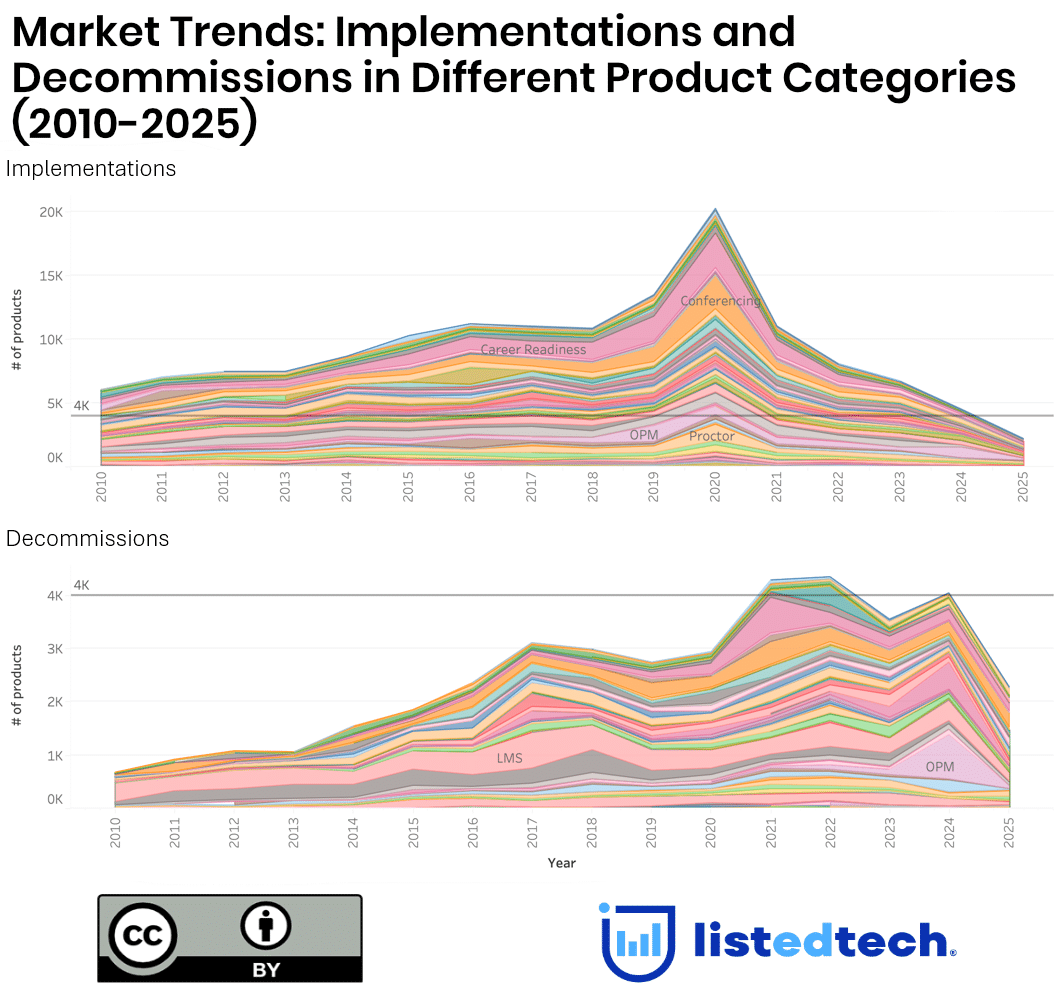
When we look at our data at ListEdTech, a clear trend emerges. Over the past three to four years, the sheer volume of new technology implementations across educational institutions has slowed down considerably.
Does this mean the EdTech market is shrinking?
Not necessarily. It means the market is entering a different phase of maturity; one where growth is increasingly driven by modernization, consolidation, and squeezing more value out of existing tech stacks rather than chasing brand-new implementations.
The Post-Pandemic Cooling Period
One of the most obvious patterns in our database is the decline in new implementations following the significant increase in technology purchasing during the pandemic. Why the sudden brake? A few things are happening at once:
- Post-pandemic normalization: During COVID, schools and universities scrambled to stand up remote learning environments and digital services overnight. Projects that normally would have taken five years were crammed into five months. That frantic pace of purchasing wasn’t sustainable, and institutions are simply returning to more normal investment cycles.
- Budget realities: Budgets are tighter, and competing priorities are intensifying. Big tech replacements are brutally expensive, not just for the software license itself, but for the implementation, integration, training, and change management.
- Implementation fatigue: ERPs, SISs, and LMSs are deeply baked into the daily operations of a campus. After years of relentless tech transformations, many institutions are dealing with integration fatigue and aren’t in a rush to tackle another massive overhaul.
- Maturing product categories: Several EdTech product categories are hitting maturity. Most institutions already have established solutions for core functions like learning management and student information systems. As market penetration deepens, the pool of first-time buyers naturally shrinks.
Institutions Are Keeping Their Systems Longer
Another fascinating trend hiding in our lifecycle data is how long schools hold onto their technology before making a move.
The average lifespan of an EdTech product has crept up over the past decade. Back in 2011, an institution kept a product for an average of about 6.5 years. By 2023, that number climbed to roughly 10.9 years, before hovering around 10 years in our most recent figures.
Institutions are holding onto their tech investments much longer than they used to, and for good reason:
- The ROI hurdle: Ripping out a functioning system is getting harder and harder to justify on paper. Institutions may prefer to invest in improving their existing environment rather than going for a complete replacement.
- The cloud shift: Cloud migrations have changed the rules. Moving an existing system to the cloud doesn’t automatically mean changing vendors, which keeps the incumbent platform alive for years longer.
- Continuous updates: Vendors are delivering continuous updates and feature drops rather than forcing disruptive, hard-stop version upgrades.
The result is a market where technology replacement decisions are becoming more deliberate.
A Slowdown Doesn’t Mean a Shrinking Market
It is crucial to separate “new implementations” from the health of the overall EdTech market. When you dig into the numbers, a few market realities stand out:
- Slower replacement cycles: Institutions are taking their time to replace existing systems.
- Fewer buyers: Consolidation and campus closures mean fewer institutional buyers in some submarkets.
- Portfolio trimming: Institutions are increasingly reviewing their tech stack to cut redundancy and decommission multiple products to keep one solution.
If one only tracks brand-new implementations, one is missing a massive chunk of what’s actually happening in the market.
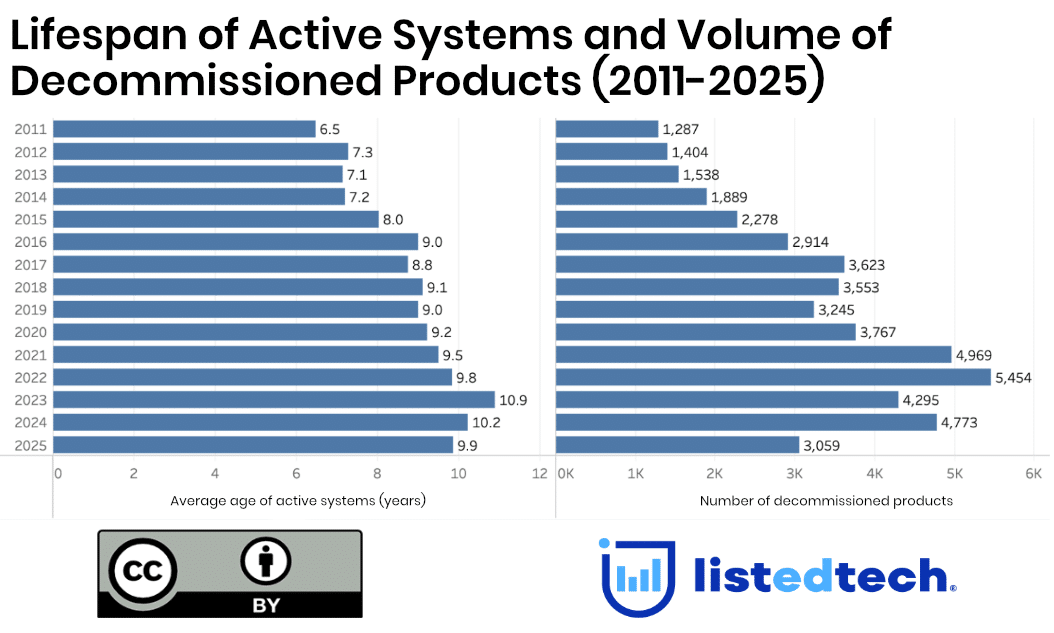
Note on Decommission Data: Because calculating an accurate system lifespan requires both an implementation date and a decommission date, our sample size for decommissions is smaller. As a result, these numbers do not match the total volume shown in the decommissions graph.
What‘s the Strategy for EdTech vendors?
For companies selling into HigherEd and K-12, the old playbook of hunting exclusively for greenfield clients is getting tougher, especially in mature categories. To keep growing, vendors need to nurture existing customer relationships by proving continuous value day in and day out. Another strategy would be to help current institutional clients transition to the cloud, ensuring that they stay within the current solution framework. A third thing to consider is that institutions want fewer disparate systems to manage. Vendors offering broader platforms and seamless integrations have an advantage. It can be a double-edged sword that puts specialized point-solutions at risk of becoming redundant. Finally, knowing when a product is nearing the end of its typical 10-year lifecycle is where market intelligence pays off. Understanding decommissioning patterns tells you where the next genuine replacement windows will open.
The Next Phase for the EdTech Market
The EdTech market isn’t dying of thirst; it’s maturing. Instead, it may be transitioning from a period of rapid adoption toward a more mature market characterized by longer product lifecycles, modernization, and consolidation. A slowdown in new implementations doesn’t mean universities, colleges and school districts are spending less on technology; it means they are spending differently.
For vendors, the challenge is adapting growth strategies to new market realities. For institutions, the opportunity is to make more informed decisions about when to replace, modernize, consolidate, or extend the life of their existing technology.
At ListEdTech, we continue to track technology implementations, decommissions, and adoption trends across educational institutions to help the industry better understand how the market is evolving.