
Key Takeaways:
- Adoption of Cloud Computing in Education Is Trust-Driven: The transition to cloud-based systems like email, LMS, and SIS reflects an evolving trust in cloud providers to handle sensitive data securely and reliably, overcoming traditional resistance in education.
- Technological Shifts Require Mindset Changes: Similar to Salesforce’s story, the adoption of cloud computing in education highlights that technological progress is as much about changing perceptions and embracing new paradigms as it is about technical advancements.
We’ve all heard the story of Salesforce—a remarkable journey of innovation and growth in the tech industry, especially in cloud computing. This story is often framed as a lesson in educating customers about its core idea: Software as a Service (SaaS)—a revolutionary model at the time. But I believe this story is equally about teaching the market and transforming perceptions. Salesforce’s success wasn’t just about selling software; it was about leading a shift in mindset.
The move to the cloud is not purely a technical decision; it’s fundamentally about readiness and trust. For institutions, it’s about accepting that a third party—one hosting their data—is better equipped to secure that data and deliver superior services to clients. This required a paradigm shift, particularly in industries such as education, where the stakes are high, and decisions are often rooted in tradition.
Shift to Cloud Computing in Core Product Categories
This growing acceptance of the cloud didn’t happen overnight. It started with systems like email, which, while critical to operations, were seen as manageable entry points for cloud adoption. These early transitions allowed institutions to build confidence in the security and reliability of cloud providers, laying the groundwork for a broader shift to core product categories—a transformation that continues to shape the future of education technology.
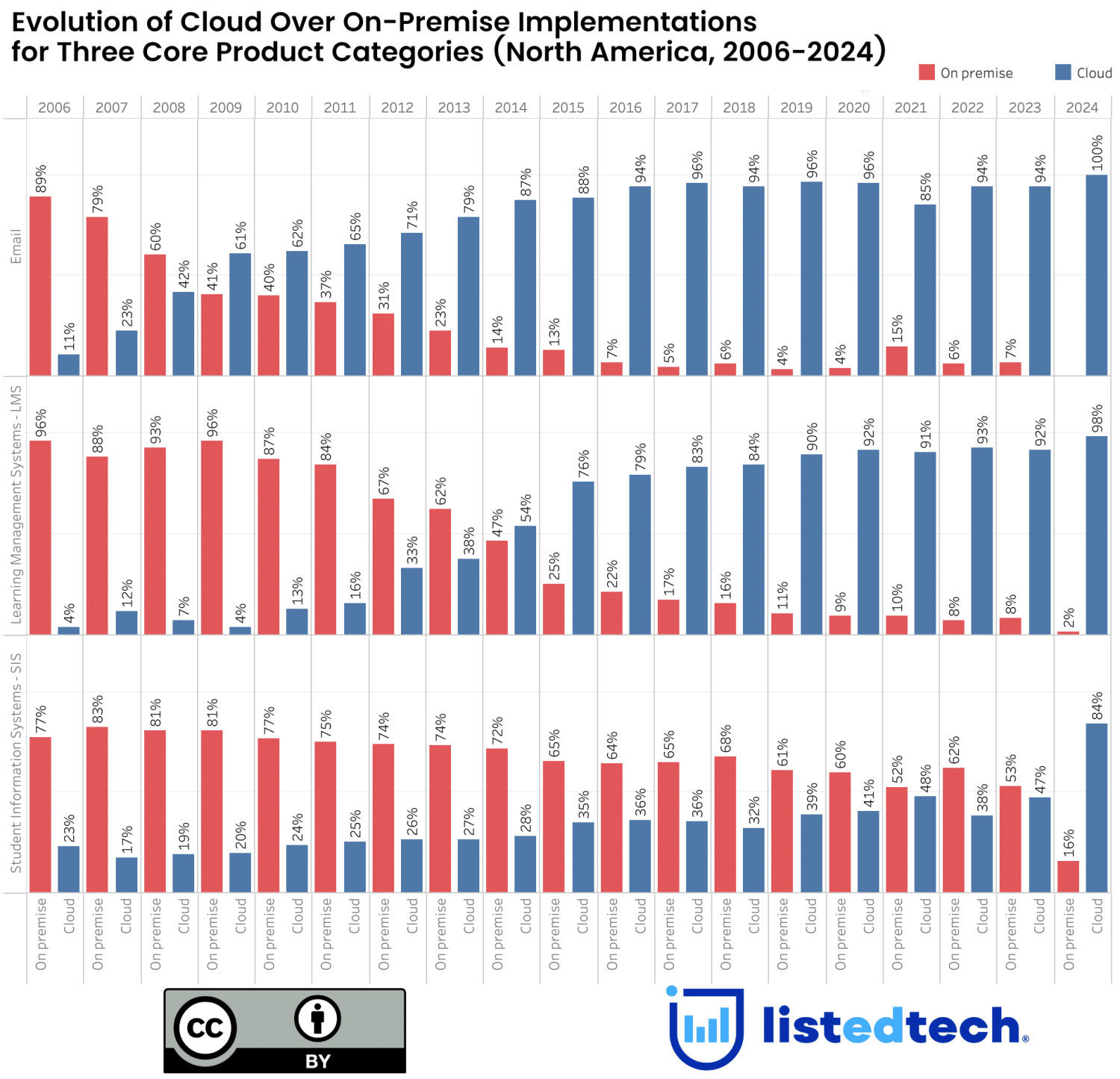
As mentioned, this shift in acceptance was first tested with Email Systems. By 2009, we saw the tipping point—new cloud-based email implementations surpassed 50% of the market. This was a critical moment that demonstrated institutions’ growing willingness to embrace the cloud.
Next came Learning Management Systems (LMS), which crossed a similar threshold by 2014. The move to cloud-based LMS platforms highlighted a growing trust in cloud providers to handle not just communication but also the infrastructure that supports core academic delivery.
Finally, Student Information Systems (SIS) have been slower to adopt, reflecting the heightened complexity and sensitivity of student data. But we’re now on the cusp of another milestone. Based on current trends, 2024—exactly a decade after LMS adoption hit its stride—appears to be the year cloud-based SIS solutions become the standard.
The Evolution of Trust in Cloud Computing
The journey of cloud computing adoption in education mirrors Salesforce’s story: a steady evolution of acceptance and trust, driven by the realization that cloud providers can offer unparalleled security, scalability, and innovation. It’s a reminder that technological change is as much about shifting mindsets as it is about advancing tools.