Key Takeaways:
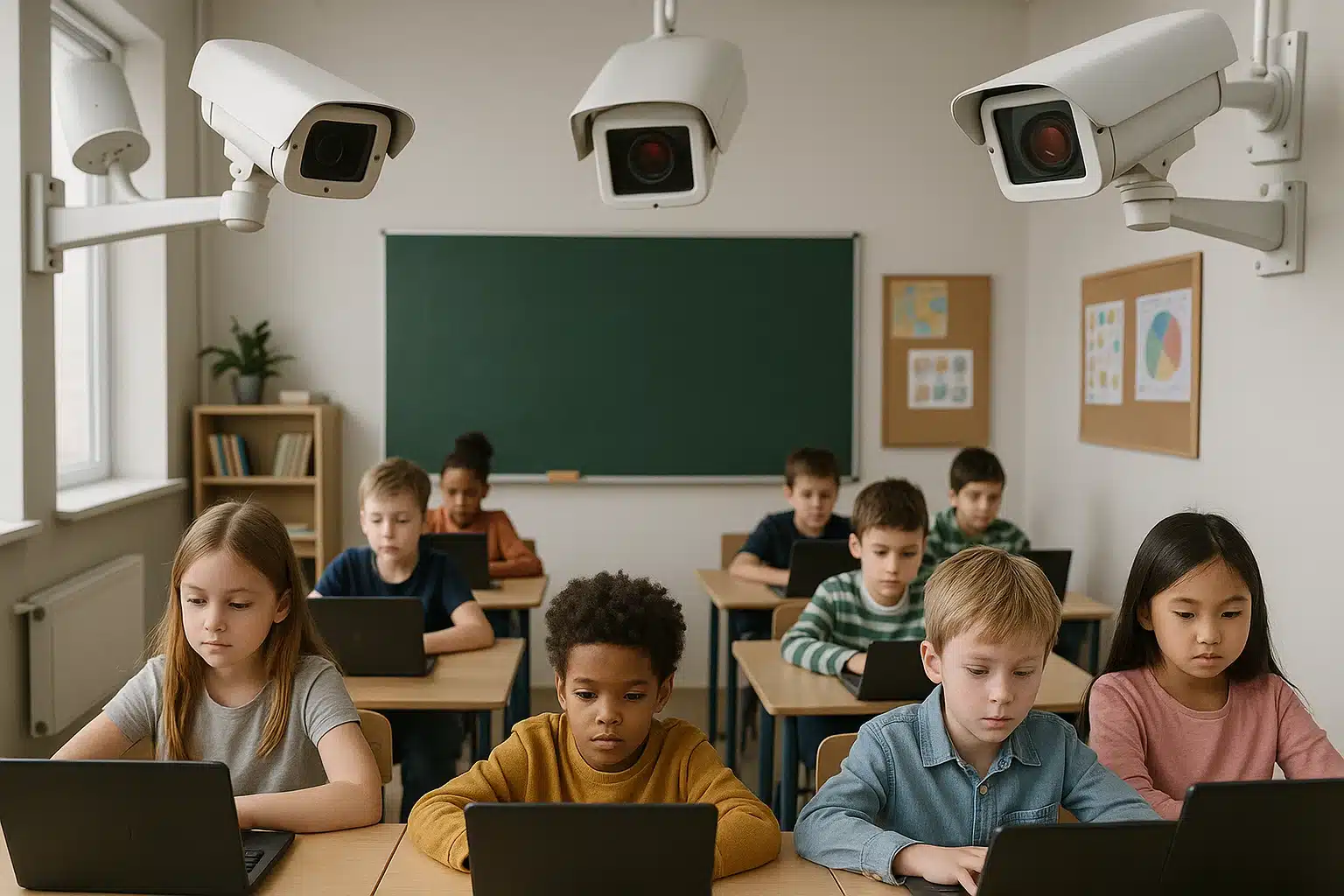
- Surveillance Is Becoming the Norm: From behavior-tracking to biometric scans, student monitoring tools are now common—but not without controversy and risk.
- Regulation Is Catching Up: With the end of self-regulation, states and federal agencies are enforcing stricter rules on data retention, advertising, and algorithmic transparency.
- Trust Is the New Competitive Edge: EdTech vendors must now design for privacy, communicate transparently, and meet rising ethical and regulatory expectations to remain viable partners for schools.
As classrooms digitize, the promise of EdTech meets mounting concern over an unintended byproduct: student surveillance. Over the last two months, privacy advocates, educators, and policymakers have sounded alarms about how these tools collect, analyze, and retain student data—often with insufficient oversight.
Surveillance in the Classroom: Fresh Examples
GoGuardian & Gaggle
Edtech surveillance tools like GoGuardian and Gaggle are increasingly used in schools to monitor student activity. GoGuardian allows educators to track students’ web searches, screen content, and even emotional cues, which proponents argue can help ensure focus and safety in digital learning environments. Gaggle, on the other hand, scans students’ messages, documents, and online behavior for indicators of self-harm or distress, with the goal of enabling timely interventions. However, both tools have sparked controversy: critics warn that such software normalizes surveillance culture in schools and may infringe on students’ privacy. Concerns have also been raised about potential bias—particularly in Gaggle’s flagging of LGBTQ-related content—and about conditioning children to accept constant monitoring as a norm.
ClassDojo: Shaming by Design?
Parents and experts have raised concerns over its public display of “behavior points” and ambiguous data-sharing practices. A Victorian study found serious privacy issues—capturing text, photos, videos, location, and even facial recognition—while potential student shaming and anxiety were flagged.
Edmodo: Legal Precedent on Privacy Violations
In 2023, Edmodo was fined $6M by the FTC for illegally collecting children’s data under COPPA, storing data without consent, and using it for advertising. They were also banned from retaining such data without parental approval.
Facial/Biometric Surveillance
The use of facial recognition and biometric surveillance in schools has sparked significant controversy in both the UK and the U.S. Some school districts have piloted facial recognition systems for tasks like managing lunch lines, but these initiatives have faced public backlash over privacy, ethics, and data security concerns. In response, Colorado enacted legislation requiring that biometric data collected in schools be deleted within 18 months, while New York took a firmer stance by banning facial recognition in educational settings altogether. Policymakers and privacy advocates warn that such technologies risk reinforcing systemic bias, exacerbating inequality, and eroding trust between students, families, and schools.
Industry & Regulatory Shifts
According to EdSurge in an article dated May 14, 2025, the retirement of the Student Privacy Pledge in May 2025 marked a turning point in the regulation of educational technology. Originally launched in 2014 and signed by hundreds of vendors, the pledge represented a voluntary commitment to safeguard student data. Its sunset reflects a growing consensus that self-regulation is no longer sufficient, and that meaningful protection requires enforceable policy rather than good-faith promises.
In response, state and federal efforts to tighten oversight have accelerated. Across the U.S., bipartisan state policies now frame the use of AI in education, prioritizing human oversight, transparency, and limits on surveillance-based automation. The Federal Trade Commission (FTC) updated its COPPA rules in April 2025 to restrict long-term student data retention and require explicit opt-in for targeted advertising. Meanwhile, advocacy organizations like the EFF and ACLU continue to raise concerns about how classroom surveillance disproportionately harms vulnerable populations and erodes trust between students and educators (Proton; ACLU). These developments signal a shift toward stronger regulatory protections in the evolving digital classroom.
Cybersecurity Concerns
Despite rising cyber threats in K–12 education, most school districts remain critically under-resourced when it comes to cybersecurity. A recent analysis found that only about one-third of districts employ full-time cybersecurity staff, leaving many vulnerable to increasingly sophisticated phishing and ransomware attacks—often powered by AI-generated scam emails. As schools expand their use of student surveillance tools, these platforms themselves have become attractive targets, raising concerns about data security and the risks of exposing sensitive student information.
How Educators & Districts Are Responding
- Contract Overhauls: Districts like LAUSD and Chicago Public Schools now require vendors to disclose data collection, deletion timeframes, and third-party access.
- Privacy-First Alternatives: Schools are opting for apps like DuckDuckGo for Schools, Seesaw, and Qustodio that emphasize data minimization and transparency.
- Audit Tools & Toolkits: New resources—like EdtechReflector and Student Data Privacy Consortium scorecards—help schools evaluate products before adoption.
- Biometric Law & Backlash: States banning facial recognition in educational settings are pressuring schools to rethink biometric deployments.
The Biggest Takeaway for EdTech Stakeholders
The evolution of classroom technology has shifted the meaning of EdTech from data-driven innovation to trust-centered design. Today’s most urgent challenge isn’t just building smarter tools—it’s building responsible ones. For vendors, this means embedding privacy and security by default, offering transparent policies on data use and retention, and preparing for a landscape where regulatory scrutiny and district audits are the norm. Just as important, ethical considerations are no longer a sidebar—they are often central to procurement decisions. In this new era, success in EdTech hinges not only on what a tool can do, but whether it earns the trust of educators, parents, and students alike.